Three starts
Three campaigns, one package
Complete Edition contains three standalone campaigns that SEGA dates from 1175 to 1876: the Sengoku-era SHOGUN 2 campaign, Rise of the Samurai in the Genpei War, and Fall of the Samurai in the Boshin War. Each is a separate start, not one continuous save.
On this page
More than 700 years
SEGA’s announcement says the package holds three campaigns “spanning over 700 years of Japanese history, from the rise of the first Shogun to the fall of the last Samurai.” The official marketing page puts the same sweep at 1175 to 1876. That is the frame. It is not a single campaign clock.
| Campaign | Setting in the sources | What the player is asked to do |
|---|---|---|
| SHOGUN 2 | Sengoku Jidai. A store screenshot prints 1545 on the Honma setup card. | Take the clan from a regional power to shogun. |
| Rise of the Samurai | Genpei War, 1175. SEGA and Wikipedia both use that year. | Command clans of the Taira, Minamoto, and Fujiwara families. |
| Fall of the Samurai | Boshin War. Wikipedia places the campaign from 1864 to 1876. | Back the Shogunate or the Emperor as Japan industrialises. |
SHOGUN 2, the Sengoku campaign
This is the campaign people mean by the base game. The Ashikaga shogunate has lost its grip, and daimyo fight over the country. The player’s goal, in Steam’s wording and in SEGA’s, is to unite Japan. Wikipedia describes the map as the islands of Japan excluding Hokkaido, with a tighter unit roster than the globe-spanning Total War games that came before it.
Armies mix ashigaru levies and specialist samurai. Castles are tiered compounds. Ships are wooden Japanese warships. Religion is Shinto-Buddhism or Catholicism. The late-game crisis is Realm Divide, triggered by Kyoto or by fame. The campaign guide goes through those systems, and the clan list covers the nine major clans, three packs, and the new minor factions SEGA added for Complete Edition.
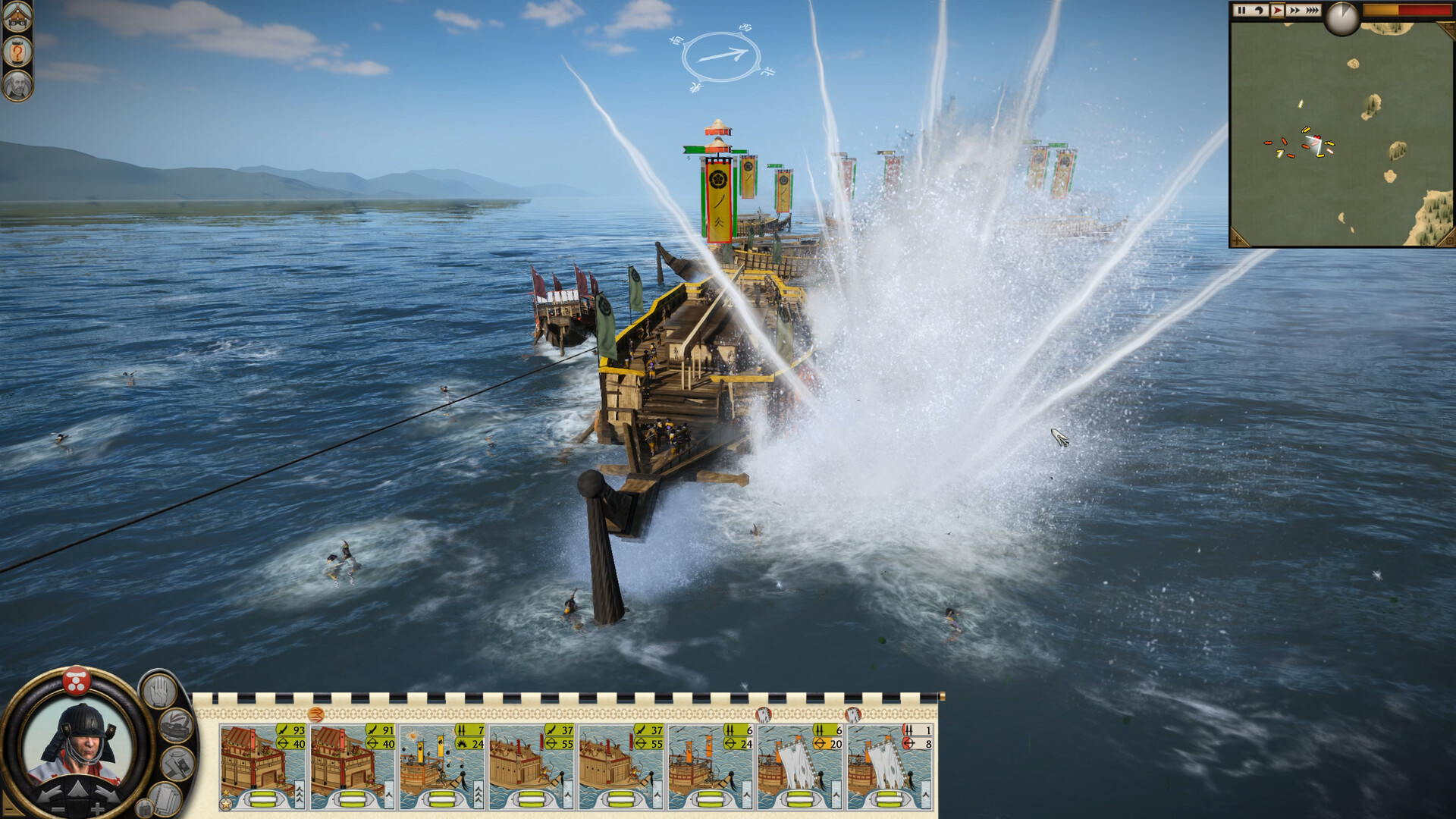
The ship in that shot, and the heavy bune described in a companion screenshot, belong to the older naval model: soldiers and archers aboard wooden hulls, plus cannon fire between ships. They are not the steam ironclads of Fall of the Samurai.
Rise of the Samurai
SEGA’s line for this campaign is short: revisit the Genpei War in 1175 and command the great clans whose fight shaped Japan. Wikipedia places it about 400 years before the Sengoku civil war and describes a conflict among six legendary clans of the Taira, Minamoto, and Fujiwara families, ending in the first shogunate and the rise of the samurai as rulers.
The Total War Wiki names the six playable clans: Hiraizumi Fujiwara, Kubota Fujiwara, Kamakura Minamoto, Kiso Minamoto, Fukuhara Taira, and Yashima Taira.
Wikipedia’s contents list for the original pack is specific enough to quote as a scope, not as a Complete Edition patch note:
- 16 new land units across swords, spears, bows, and cavalry.
- 4 new hero units.
- 10 new naval units and 3 new naval abilities.
- 4 new agent types, each with a skill tree.
- A historical battle, Anegawa, set in 1570. That battle is a scenario, not the year of the campaign.
The same account says the campaign keeps Realm Divide. It also says the pack’s units are available in single-player and multiplayer battles, so the roster is not locked inside the 1175 map.
Fall of the Samurai
Fall of the Samurai released on 23 March 2012 as a standalone expansion. It is set in the Bakumatsu and the Boshin War, about 300 years after the base game. Supporters of the Tokugawa shogunate face supporters of the emperor, while Western pressure pushes Japan toward a conscript, industrial army. Wikipedia says the player picks a domain and has to help one side win.
The campaign starts in 1864. Pro-shogunate domains begin in control of Kyoto and Edo. Winning is tied to those cities and to dominance on the map. The map adds provinces the base game left out, including Hokkaido, plus Tanegashima, Tsushima, and the Goto islands.
Time is finer. Turns per year go from four to twenty-four, six turns a season, because the war is shorter. Armies move more slowly and can take several turns to cross a province. Railways in some provinces move armies quickly. Traditional samurai and levies are available at the start. Modern research and Western-style buildings unlock rifle infantry, artillery, and Gatling guns, which the same account says largely make traditional units obsolete. Higher modernisation tiers also raise unrest.
Navies become steam warships with broadside cannon, closer to Empire and Napoleon than to the bune fleets. Ships can bombard armies and provinces, and coastal forts can answer. A new control lets the player aim artillery and ships from a third-person view.
Religion is gone, replaced by allegiance to the Emperor, the Shogunate, or a republic. Realm Divide returns in a political form, including a republic path modeled on the historical Republic of Ezo that eventually sets every other faction against the player. Ten playable domains, five and five, are listed on the factions page. In 2019 the expansion was also reissued under the name Total War Saga: Fall of the Samurai. Complete Edition’s FAQ still refers to it as part of SHOGUN 2’s DLC.
How to tell the campaigns apart in the package
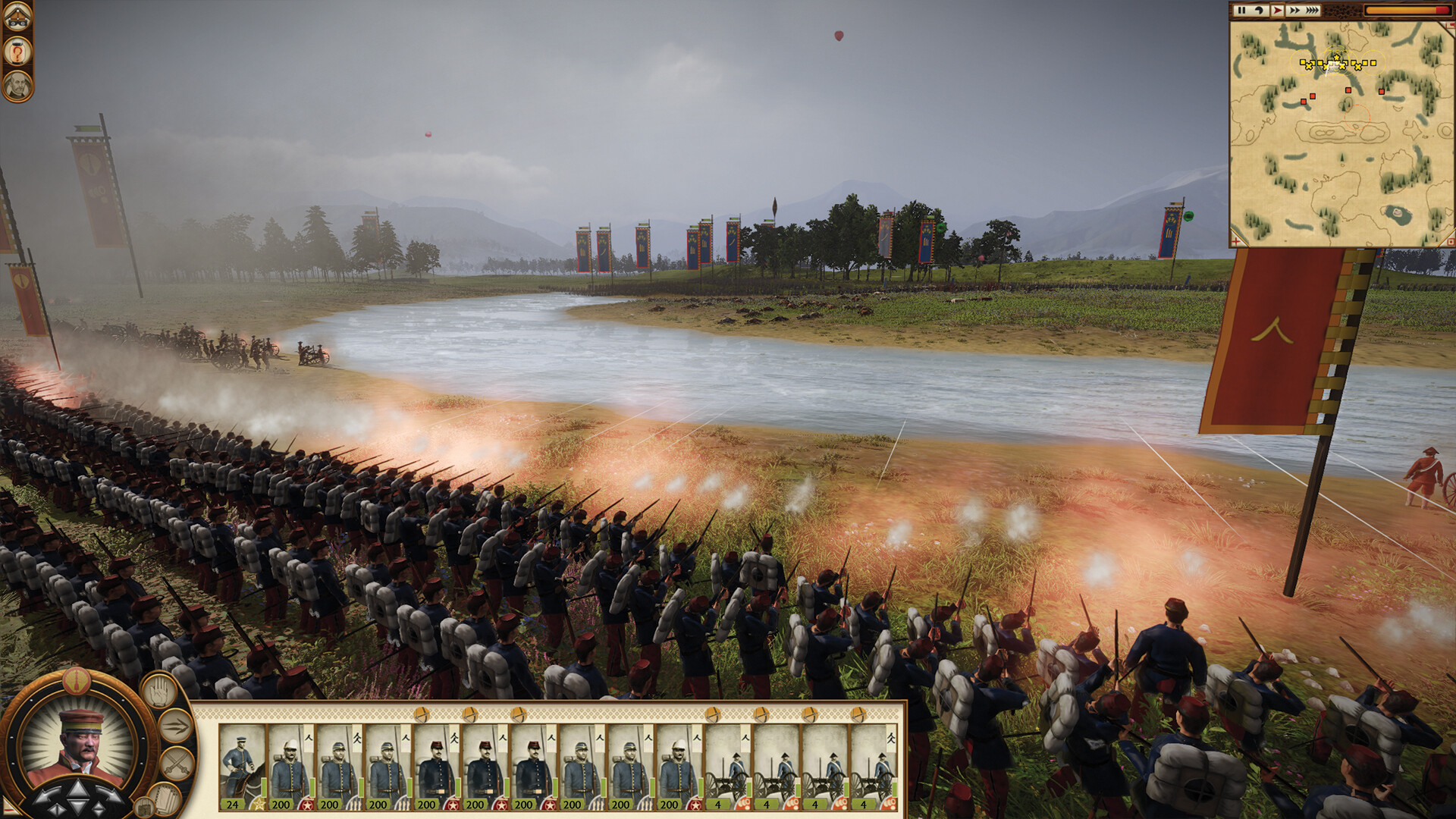
SEGA calls each one standalone. A Sengoku save does not continue into 1864. Visual cues in the store screenshots line up with the written split: wooden ships and samurai banners on one side, ranked rifle infantry in modern uniforms on the other. The clan-select screenshot labeled “Shogun 2 Campaign” is the Sengoku start, with Honma and the year 1545.
Complete Edition’s new minor factions are described as “50+” and “more than 50,” not as a per-campaign split. This page does not divide that figure across the three maps. The FAQ contrasts the original game with Complete Edition. It does not describe a switch inside the 2011 install that turns the new factions on.
Which older box already contained which campaign is a different question. The North American Gold Edition of 2013 held the base game plus both campaign expansions. That comparison is on older editions.